What Bulk Bag Should I Use for Soil, Sand or Rubble?
Soil, sand and rubble can all go into bulk bags – but that doesn’t mean the same bag’s right for every job. Sand and wet soil become heavy way before your large bag looks full, and broken bricks, concrete and tiles can put extra strain on your fabric.
For most soil and sand, a standard one-tonne FIBC bulk bag with a 1,000kg safe working load is a good bet. For sharp or abrasive rubble, you’re better off using a heavy-duty bag with thicker fabric and added wear protection. If you’ll be using a forklift to move your bags around a busy site, a tunnel-lift design will make your handling quicker and more controlled.
The thing to remember is to match your bag to your material, its weight and your handling method—not just the amount of space you need.
Quick guide: the best bulk bag for each job
| Bag | Best for | Key features | Current listed price* | |
| One-Tonne FIBC Bulk Bag | Soil, sand, aggregates and general building materials | 1,000kg SWL, four lifting loops, open top and flat base | From £1.40 ex VAT | |
| Heavy-Duty Bulk Bag | Coarse aggregates, abrasive material and rubble with rough edges | Thicker fabric, wear protection and greater resistance to damage | From £3.12 ex VAT | |
| Tunnel-Lift Builders’ Bag | Soil, sand and aggregates moved regularly by forklift | Built-in tunnel sleeves for faster forklift handling | From £2.87 ex VAT | |
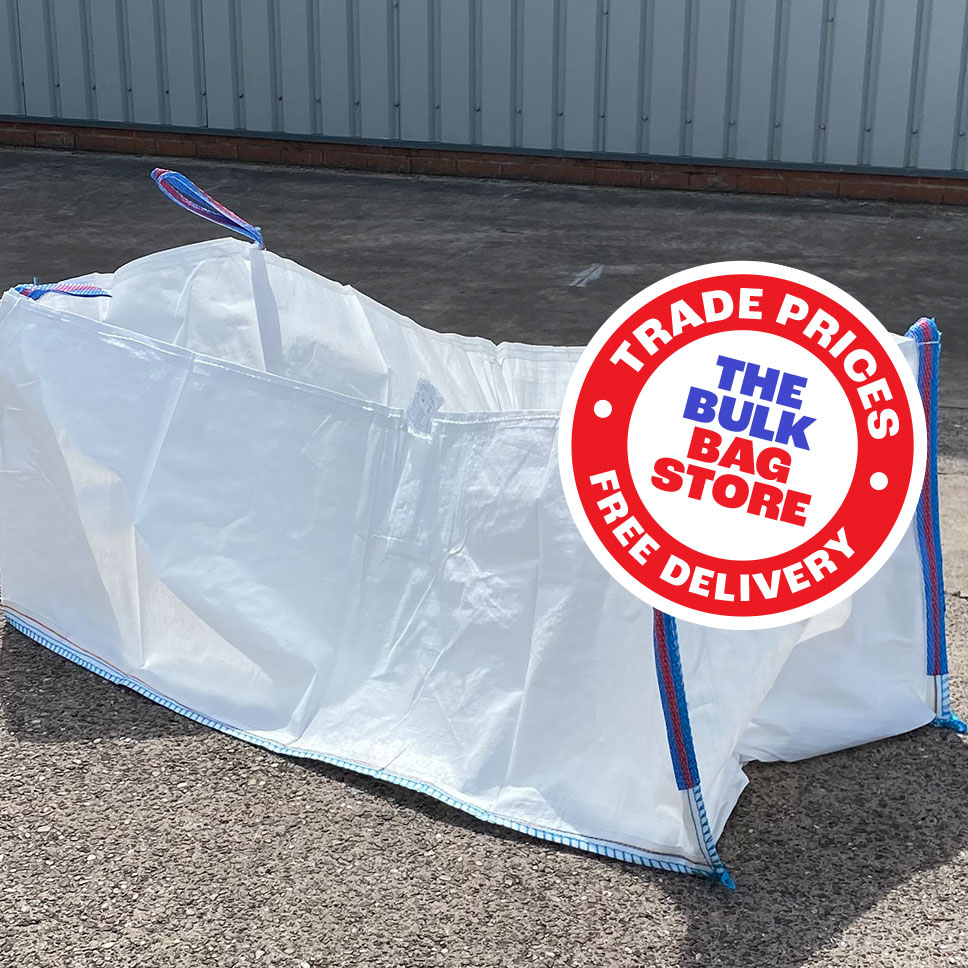
| Skip or Jumbo Bag | Bulky clearance waste and larger pieces of light building waste | Larger footprint and high-volume format; (check the stated SWL) | From £3.87 ex VAT |
*Prices shown were our listed ones at the time of writing and vary based on your quantity and spec. Check our product page for current pricing.
The difference between size and safe working load
It’s easy to assume that you should always fill your “one-tonne bag” to the top. But the name’s actually to do with its safe working load (SWL), not how much material fits inside.
The SWL is the maximum load your bag’s designed to carry. If the label says 1,000kg, it means it shouldn’t hold more than 1,000kg—even if there’s still room in the bag.
When it comes to Bulk bags, the dimensions are to do with volume. So an 80cm cube potentially has a volume of around 0.51m³, while a 90cm cube is around 0.73m³. (Your actual usable volume can change once your bag fills and changes shape.)
And then there’s your material density. So your dry topsoil, wet clay, building sand and mixed rubble can have very different weights, even for the same volume. Moisture matters, too: rain-soaked soil or sand could be much heavier than you expect. if you’re not sure about density, weigh your material or play it safe with your filling level.
Our guide to bulk bag capacity talks you through finding the right spec for your size, density and material.
What bulk bag should I use for soil?
If you’re working with clean topsoil, screened soil or for most landscaping work, your standard one-tonne FIBC is usually the way to go. Its open top makes it easy for you to fill with a shovel, small loader or chute, and its flat base is really handy for storage and delivery.
Choose your dimensions based on the amount of soil you need, but keep the 1,000kg SWL as your hard limit. This is really important when you’re working with wet soil, clay-rich material or soil containing stones – they can all be way heavier than loose, dry topsoil.
If you’ve got restricted access, or your material’s going to be split across different locations, you might find a smaller bag better. A set of manageable bags might also be easier to position than one large one that can’t be moved once you’ve filled it.
Think about your soil, too:
- Dry, screened topsoil: your standard uncoated builders’ bag is good for lots of short-term jobs.
- Wet or dense soil: use a rated FIBC – but reduce your fill level so it stays within the SWL.
- Soil containing stones or roots: a heavier fabric might be better if your contents could rub or press against your bag.
- Contaminated soil: don’t use an ordinary builders’ bag unless you have specialist advice and the right waste route.
It’s worth remembering that garden waste bags are designed for leaves, grass, pruning and other garden debris – they might not be the right substitute for your load-rated FIBC if you’re moving heavy soil. Always check your label and what it’s designed for.
What bulk bag should I use for sand?
A standard one-tonne bulk bag is great for all sorts of builders’ sand, sharp sand and aggregates. But sand is dense – so your large bag can reach its weight limit way before it reaches its volume limit.
For straightforward filling and emptying, an open-top, flat-base bag is a good, cost-effective choice. But if you fill your bags using dedicated machinery, need a neater closure or want controlled discharge, it’s worth asking about a custom filling spout, duffle top or discharge spout.
Fine, dry sand can also work through small gaps in your woven fabric or seams. If you’re worried about product loss, dust or contamination, you might want to think about a coated bag, sift-resistant seams or a liner. Coating can reduce how much your sand moves, but it’s worth knowing that it doesn’t make every FIBC completely watertight.
If you’re storing your bags outdoors, keep them on a clean, stable surface and protect them from prolonged rain. Added water increases your load and might affect your sand. Check your bag before you lift it, especially if it’s been exposed to sunlight, weather or site traffic.
What bulk bag should I use for rubble?
When it comes to rubble, there’s more to think about than just weight. Your broken bricks, concrete, tiles and masonry can wear down, puncture or cut ordinary woven polypropylene.
If you’re dealing with smaller, quite blunt pieces, a rated one-tonne builders’ bag can be enough – when it’s filled carefully. If you’ve got mixed demolition waste, coarse aggregates or rough material, a heavy-duty bulk bag is definitely your better choice. Thicker fabric and reinforced construction give you more protection against wear – although of course no flexible bag’s totally immune to sharp objects or bad handling.
Remember not to drop rubble into your bag from height. Put your bag on level ground, keep it supported while you fill it, and distribute your load as evenly as possible. Don’t let long or jagged pieces press through the side, and never fill beyond the marked SWL.
A skip or jumbo bag gives you way more volume if you’ve got bulky clearance material. But more volume doesn’t mean unlimited weight – always follow your specific bag’s label. The current Skip and Jumbo Bag spec gives a 1,000kg SWL and a 5:1 safety factor – so don’t use your extra space to carry several tonnes.
Don’t put asbestos, chemicals, contaminated waste, sharp metal or large sheets of broken glass into an ordinary rubble bag. They need a specialist container and disposal route. If a waste company’s collecting your bag, check their rules before you fill – they might not take everything.
When is a tunnel-lift bulk bag worth choosing?
Standard FIBCs have four corner loops that you need to put into the right position on the right kind of lifting equipment. But with Tunnel-lift builders’ bags, they have sleeves that your forklift tines can go through, helping you pick up bags quicker.
They’re really useful if you’re a builders’ merchant, aggregate supplier or constantly move loads of soil or sand. They can also mean you don’t need an operator to approach your bag and place loops over your tines.
It’s worth remembering that tunnel sleeves don’t increase the SWL, unless your bag’s specifically rated for a higher load. Your forklift capacity, tine spacing, ground conditions and the bag label are still what tells you if your lift’s safe.
What does a 5:1 safety factor mean?
A lot of builders’ FIBCs have a 5:1 safety factor and are marked for single-trip use. The 5:1 ratio is to do with the bag’s design and testing – it doesn’t mean you can load your 1,000kg SWL bag with 5,000kg.
The SWL is still your bag’s maximum permitted load. So if your bag’s marked 5:1, don’t use it for another loaded lifting cycle unless it has the right certification and manufacturer’s instructions. If you need a multi-trip bag, choose one that’s designed and certified for it.
Five checks before filling any builders’ bulk bag
- Read your label. Confirm your SWL, safety factor and use.
- Inspect your bag. Don’t use it if the fabric, seams or lifting loops are cut, heavily worn or contaminated.
- Prepare your ground. Fill on a level surface away from sharp debris, moving vehicles and unsupported edges.
- Control your load. Think about density and moisture – don’t just judge weight by sight.
- Plan your lift. Use the right equipment, engage every lifting loop or tunnel correctly and never stand beneath a suspended bag.
Which bag should you choose?
If you’re working with most clean soil and sand, start with a one-tonne FIBC that’s the right size for your volume. Move to a heavy-duty bag of you’ve got rubble, stones or coarse aggregate that could create damage. Go for a tunnel lift when forklift speed and handling are your priorities, or a jumbo version when you’re after extra space for your bulky but weight-controlled material.
Still not sure? Talk to our expert team to find the right bag for your job.